
 During veterinary school, there are many illnesses about which we burgeoning doctors are educated. Many are common diseases which we face in clinical practice on a regular basis. Others are less common and are given the nickname "zebras". I just treated one of these zebras in the form of bot fly (Dermatobia Hominisor) larvae removal from a dog in Peru. Those having seen Animal Planet's Monsters Inside Me may know of the gut wrenching horror caused to humans harboring these arthropod beasties.
One of the remote locations I worked at during my vets abroad Peruvian trip with Amazon Cares was the village of San Pedro on the Amazon River. This quaint and tidy location was a pleasant change from the crowded filth of Iquitos. Friendly people inhabited both places, yet the San Pedro natives better respected their surroundings, which reflected in the overall cleanliness of their buildings and grounds.
As the dogs and cats of San Pedro live a more rural existence in the jungle, the volume of external parasites I was called upon to treat was considerably higher than their city counterparts. The poor dogs and cats were covered with fleas, which also seemed to have an appetite for our gringo blood.
During veterinary school, there are many illnesses about which we burgeoning doctors are educated. Many are common diseases which we face in clinical practice on a regular basis. Others are less common and are given the nickname "zebras". I just treated one of these zebras in the form of bot fly (Dermatobia Hominisor) larvae removal from a dog in Peru. Those having seen Animal Planet's Monsters Inside Me may know of the gut wrenching horror caused to humans harboring these arthropod beasties.
One of the remote locations I worked at during my vets abroad Peruvian trip with Amazon Cares was the village of San Pedro on the Amazon River. This quaint and tidy location was a pleasant change from the crowded filth of Iquitos. Friendly people inhabited both places, yet the San Pedro natives better respected their surroundings, which reflected in the overall cleanliness of their buildings and grounds.
As the dogs and cats of San Pedro live a more rural existence in the jungle, the volume of external parasites I was called upon to treat was considerably higher than their city counterparts. The poor dogs and cats were covered with fleas, which also seemed to have an appetite for our gringo blood.
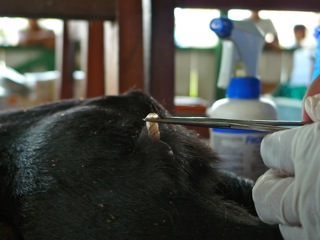 A few of the dogs harbored bot fly larvae under the surface of their skin. The firm nodules in the subcutaneous space, termed warbles, are relatively easy to locate and occur after the bot fly larvae enter the skin.
My surgery patients were anesthetized for spay and neuter procedures, so I was able to remove the larvae with relative ease while causing no apparent discomfort. With gentle persistence and retraction, out popped an appalling caterpillar-esque parasite that otherwise would have hatched and burst forward into the world to repeat the process on another creature (including humans).
A few of the dogs harbored bot fly larvae under the surface of their skin. The firm nodules in the subcutaneous space, termed warbles, are relatively easy to locate and occur after the bot fly larvae enter the skin.
My surgery patients were anesthetized for spay and neuter procedures, so I was able to remove the larvae with relative ease while causing no apparent discomfort. With gentle persistence and retraction, out popped an appalling caterpillar-esque parasite that otherwise would have hatched and burst forward into the world to repeat the process on another creature (including humans).
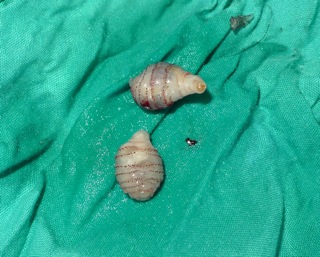 Besides the shocking photos, some amazing video was shot vividly detailing the larvae removal. Unfortunately, due to the speed of video upload, I will have to post these stomach churning videos when I am back in the states (so make sure to sign up for email delivery of my blog by following this link).
Besides living in an environment free from bot fly inhabitation, the best thing to avoid having bot fly eggs implanted in your pet's skin is to prevent insect bites from happening in the first place.
Besides the shocking photos, some amazing video was shot vividly detailing the larvae removal. Unfortunately, due to the speed of video upload, I will have to post these stomach churning videos when I am back in the states (so make sure to sign up for email delivery of my blog by following this link).
Besides living in an environment free from bot fly inhabitation, the best thing to avoid having bot fly eggs implanted in your pet's skin is to prevent insect bites from happening in the first place.
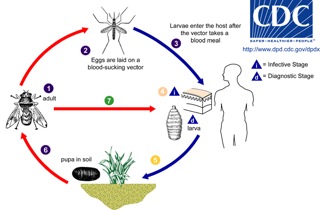 Interestingly, the lifecycle (see Centers for Disease Control Myasis chart) of the bot fly requires an arthropod vector, such as a mosquito or tick. The vector carries and releases the bot fly eggs onto an animal's skin which hatch into larvae which enter the body through any readily available opening. Even holes from insect bites, cuts, abrasions, or any other skin trauma can potentially act as the larval portal.
If you live in a bot fly infested environment, which is common around farms housing livestock, employ regular deworming to kill ingested larvae that may pass out with feces and hatch into adults.
For dogs, topical insect repellant, such as those that contain Fipronil (Frontline) or collars impregnated with Amitraz can help. I used Fipronil to kill many ectoparasites, including fleas, ticks, but not adult bot flies. Externally located eggs and larvae that contact the product on a pet's skin or coat will die. Unfortunately, after the eggs have been implanted, there is no proven reliable treatment besides surgically extracting the more mature larvae. Prevention is key!
So, use such a product if your pet could be exposed to any biting pests. Make sure to use a product that is appropriate for your pet's species (cat product on cat, etc) and follow the recommend dosing guidelines as per your veterinarian.
Natural products, such as those containing plant derived oils (cedar, chrysanthemum, etc) can also help deter bug bites, yet may not be as effective and could make your pet sick if used improperly. The same applies for manufactured products, so only use only on healthy pets under veterinary supervision.
I have a few more days of work in Peru and more remote villages on the Amazon River at which I will be treating people's pets. I imagine more opportunities to treat bot fly larval infestations, which is my zebra condition, will manifest.
Thank you for reading my article and to my friend Dr Jessica Vogelsang (AKA Dr V of the excellent blog Pawcurious.com) for taking such fabulous pictures.
Make sure to follow my Amazon Cares adventures by friending Patrick Mahaney: Veterinarian Acupuncture Pain Management for Your Pets on Facebook and @PatrickMahaney on Twitter.
Interestingly, the lifecycle (see Centers for Disease Control Myasis chart) of the bot fly requires an arthropod vector, such as a mosquito or tick. The vector carries and releases the bot fly eggs onto an animal's skin which hatch into larvae which enter the body through any readily available opening. Even holes from insect bites, cuts, abrasions, or any other skin trauma can potentially act as the larval portal.
If you live in a bot fly infested environment, which is common around farms housing livestock, employ regular deworming to kill ingested larvae that may pass out with feces and hatch into adults.
For dogs, topical insect repellant, such as those that contain Fipronil (Frontline) or collars impregnated with Amitraz can help. I used Fipronil to kill many ectoparasites, including fleas, ticks, but not adult bot flies. Externally located eggs and larvae that contact the product on a pet's skin or coat will die. Unfortunately, after the eggs have been implanted, there is no proven reliable treatment besides surgically extracting the more mature larvae. Prevention is key!
So, use such a product if your pet could be exposed to any biting pests. Make sure to use a product that is appropriate for your pet's species (cat product on cat, etc) and follow the recommend dosing guidelines as per your veterinarian.
Natural products, such as those containing plant derived oils (cedar, chrysanthemum, etc) can also help deter bug bites, yet may not be as effective and could make your pet sick if used improperly. The same applies for manufactured products, so only use only on healthy pets under veterinary supervision.
I have a few more days of work in Peru and more remote villages on the Amazon River at which I will be treating people's pets. I imagine more opportunities to treat bot fly larval infestations, which is my zebra condition, will manifest.
Thank you for reading my article and to my friend Dr Jessica Vogelsang (AKA Dr V of the excellent blog Pawcurious.com) for taking such fabulous pictures.
Make sure to follow my Amazon Cares adventures by friending Patrick Mahaney: Veterinarian Acupuncture Pain Management for Your Pets on Facebook and @PatrickMahaney on Twitter.